
Uncategorized
Smith Charts
This video explains how the Smith Chart helps RF engineers understand signal reflections, match antennas and transmission lines, and improve power transfer. It also explores the chart’s history, the physics behind it, and why it remains useful today.
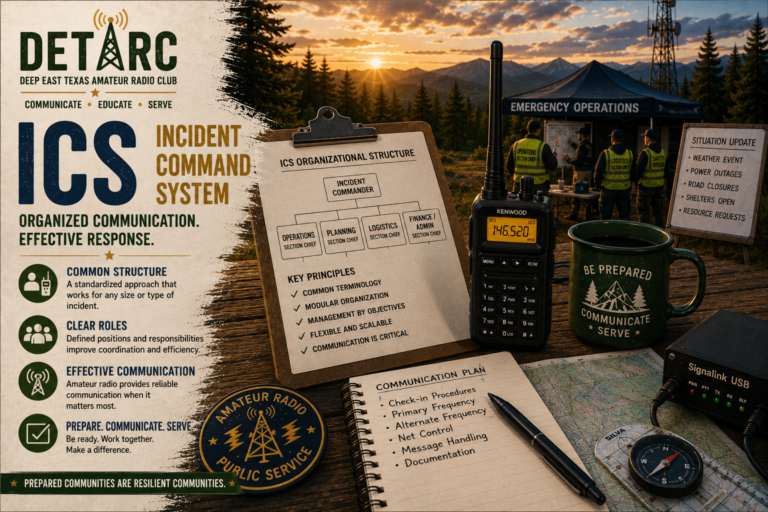
Incident Command System: Why Amateur Radio Operators Learn ICS
The Incident Command System, commonly known as ICS, is a standardized approach to managing emergency incidents and planned events. Developed to improve coordination among responding agencies, ICS has become a fundamental part of emergency management throughout the United States. Many amateur radio volunteers become familiar with ICS through organizations such as ARES, RACES, and local…
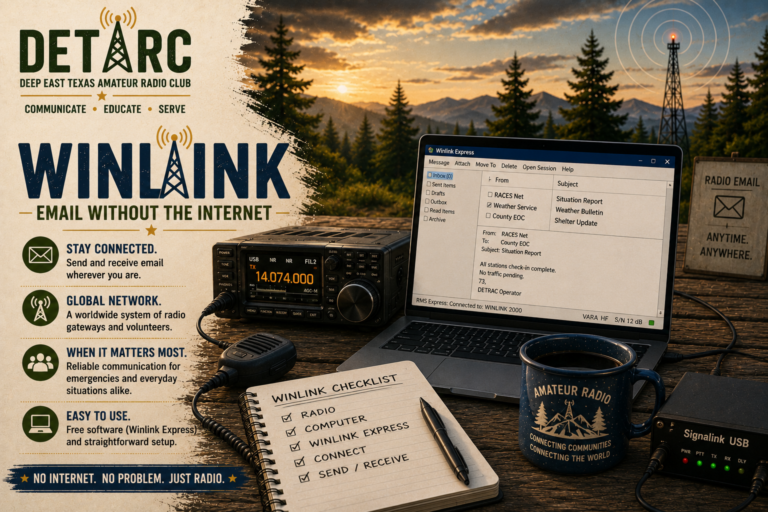
Winlink: Email Without the Internet
One of amateur radio’s most practical digital services is Winlink, a worldwide radio email system that allows operators to send and receive messages without relying on traditional internet infrastructure. Winlink uses a network of radio gateways connected to the internet, allowing stations to exchange messages over HF, VHF, or UHF frequencies. During emergencies, messages can…
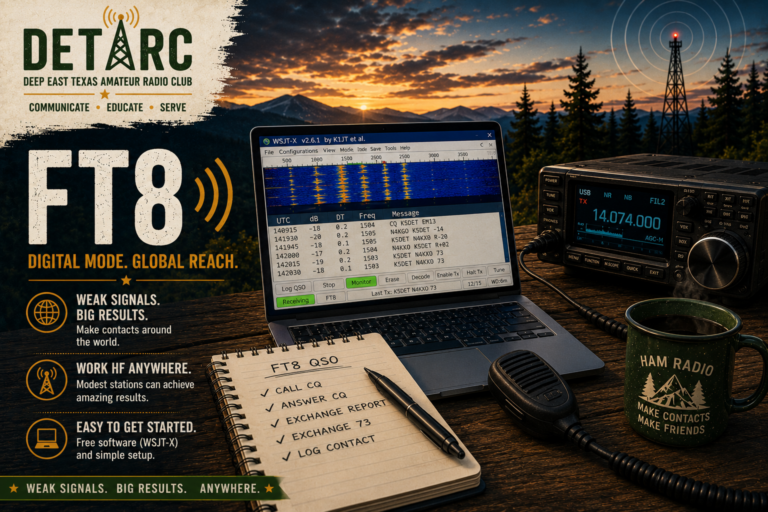
Understanding FT8: Why This Digital Mode Became So Popular
FT8 has become one of the most widely used digital modes in amateur radio, especially during periods of poor band conditions and low solar activity. Developed by Joe Taylor, K1JT, and the WSJT-X development team, FT8 was designed to allow reliable communication using very weak signals. Unlike traditional voice communication, FT8 exchanges are highly structured…