
Understanding FT8: Why This Digital Mode Became So Popular
FT8 has become one of the most widely used digital modes in amateur radio, especially during periods of poor band conditions and low solar activity. Developed by Joe Taylor, K1JT, and the WSJT-X development team, FT8 was designed to allow reliable communication using very weak signals.
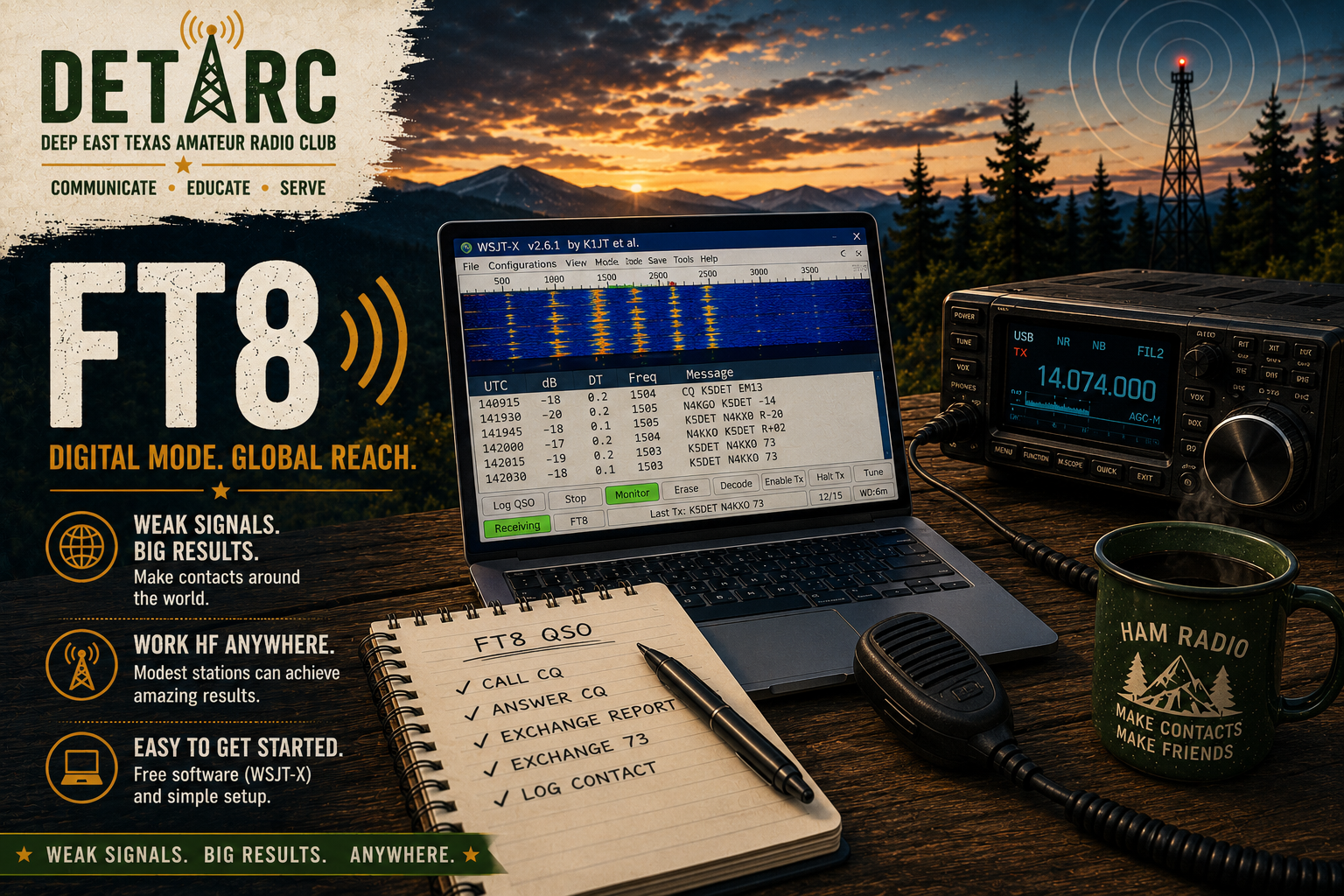
Unlike traditional voice communication, FT8 exchanges are highly structured and automated. Stations exchange callsigns, signal reports, and location information using transmissions that last approximately 15 seconds each. The software handles synchronization and decoding, allowing operators to complete contacts even when signals are barely audible.
One reason for FT8’s popularity is its ability to make contacts with modest equipment. A typical station might consist of a 100-watt transceiver, a simple wire antenna, and a computer connected to the radio. Even stations using low power and compromise antennas can often work across the country or around the world.
Operators often use FT8 to confirm new states, countries, or grid squares for various operating awards. During contests and special events, the bands may become crowded with FT8 activity, especially on the 20-meter and 40-meter bands.
Some operators appreciate the efficiency of the mode, while others prefer more conversational operating styles such as SSB or CW. Nevertheless, FT8 has introduced many new operators to HF operating and continues to be one of the fastest-growing digital modes in amateur radio.
If you are interested in trying FT8, the WSJT-X software package is freely available and supports several digital modes in addition to FT8, including FT4, JT65, and WSPR. Most modern radios can interface with a computer using either USB audio or a dedicated sound card interface.
Whether used for casual operating, award chasing, or propagation studies, FT8 has become an important part of today’s amateur radio landscape.
