
Making Your First Contact
Excerpt: New Technician ham in Lufkin or Deep East Texas? Learn making your first local radio contact with practical, beginner-friendly guidance from DETARC.
The Short Version
The first contact is often the hardest because it feels public. A simple, honest call is enough.
If you are newly licensed, do not measure success by how much you already know. Measure success by the next good step you actually take. This article gives you that next step for making your first local radio contact.
Why This Matters for a New Technician
The Technician license is more useful than many people realize, but it can feel confusing because amateur radio is not one hobby. It is a collection of skills: local communication, antennas, emergency readiness, digital tools, portable operating, experimentation, and friendship with people who enjoy helping each other learn.
This topic matters because it moves you from owning a radio to using radio purposefully. You are not just collecting equipment. You are learning how to communicate, how to listen well, how to serve your neighbors, and how to become a reliable part of the local amateur-radio community.
What You Need Before You Start
- Your FCC callsign and a willingness to identify clearly.
- A radio appropriate for the activity. For many local topics, a VHF/UHF handheld or mobile radio is enough to begin.
- Current frequency, tone, and band-plan information before transmitting.
- A notebook or digital log for settings, questions, and contacts.
- Patience. Radio learning is built one successful attempt at a time.
Step-by-Step Beginner Path
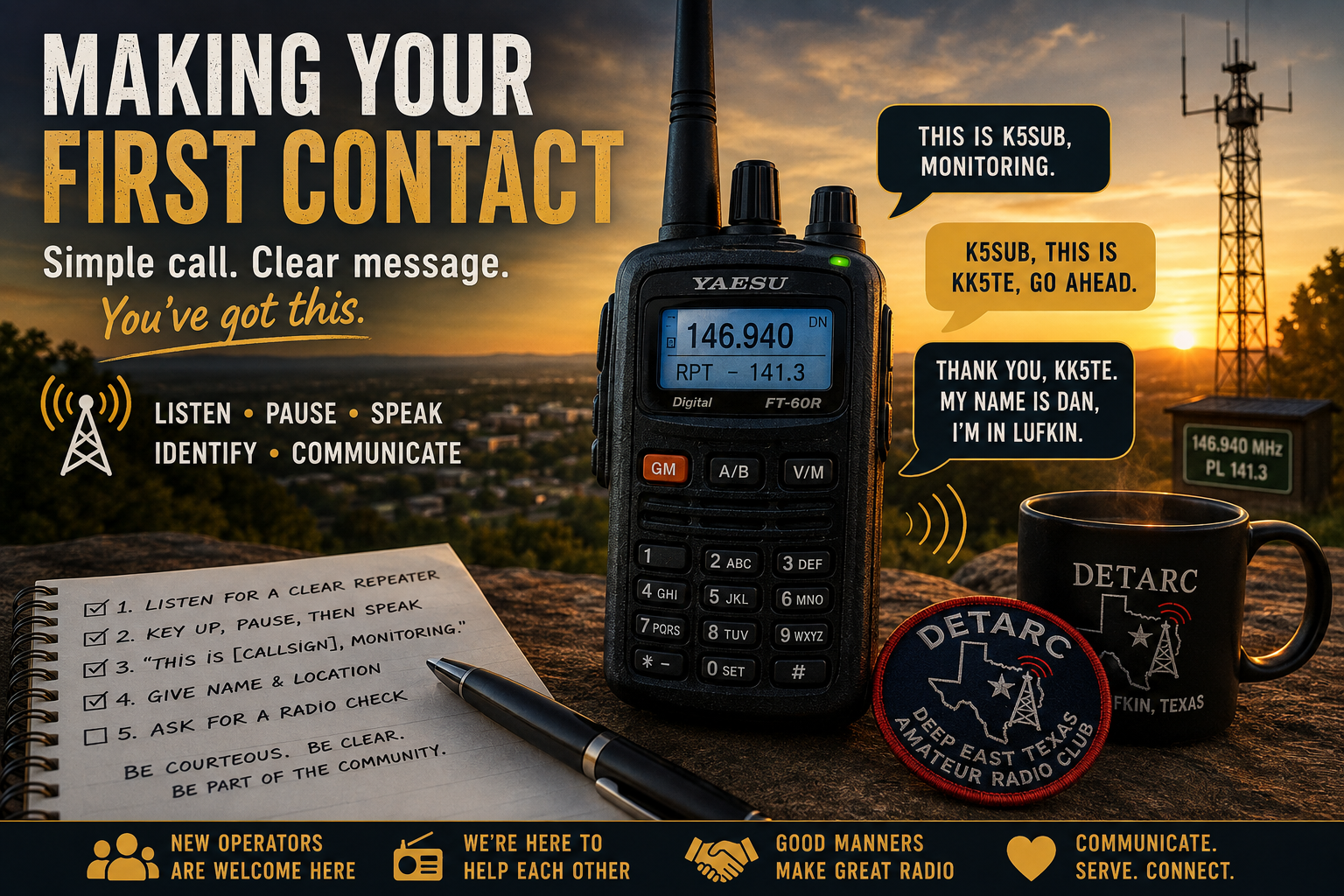
- Listen until the repeater is clear.
- Key up, pause, then speak.
- Say: “This is [callsign], monitoring.”
- If answered, give name and location.
- Ask for a radio check if needed.
Common Mistakes to Avoid
- Waiting until you feel perfectly ready.
- Speaking too quickly.
- Forgetting the other station’s callsign.
- Trying to explain every detail of your setup immediately.
A Simple First-Week Challenge
Make one short contact or ask for one radio check this week.
How This Connects to the Bigger Hobby
Every skill in amateur radio connects to something larger. Local repeater practice prepares you for nets. Nets prepare you for public-service events. Antenna experiments improve portable operating. Logging helps with HF, POTA, satellites, and awards. Digital tools teach you how radio and computers can work together when normal infrastructure is limited or overloaded.
The point is not to become an expert overnight. The point is to build dependable habits: listen first, identify properly, ask good questions, take notes, and help the next new operator when it is your turn.
Come Learn With DETARC
Amateur radio is easier when you do not have to learn alone. DETARC exists to help operators in Lufkin, Angelina County, and Deep East Texas grow in skill, confidence, and service.
- Weekly net: Tuesdays at 8:00 PM
- Primary repeater: 146.940 MHz, PL 141.3
- Club meeting: 4th Thursday at 6:30 PM, Fuller Springs VFD
Bring your callsign, your questions, and your radio if you have one. New operators are welcome here.
Choose Your Next Adventure
- Back to the landing page: You Passed Your Technician Exam. Now Choose Your First Amateur Radio Adventure.
- Current adventure: Adventure 1 — I Want to Meet Local Operators
- Next suggested article: Checking Into Your First Net
Frequently Asked Questions
Do I need expensive equipment to begin?
Usually, no. Start with the equipment that fits the activity and ask local operators before making a major purchase. The best first station is often the one you understand and will actually use.
What if I make a mistake?
You probably will, and that is normal. Keep it courteous, identify with your callsign, correct what you can, and learn from it. Every experienced operator was new once.
Is this something DETARC can help with?
Yes. DETARC is a local club, which means you can learn from people who know the repeaters, terrain, common radios, useful antennas, and real operating conditions around Deep East Texas.
