
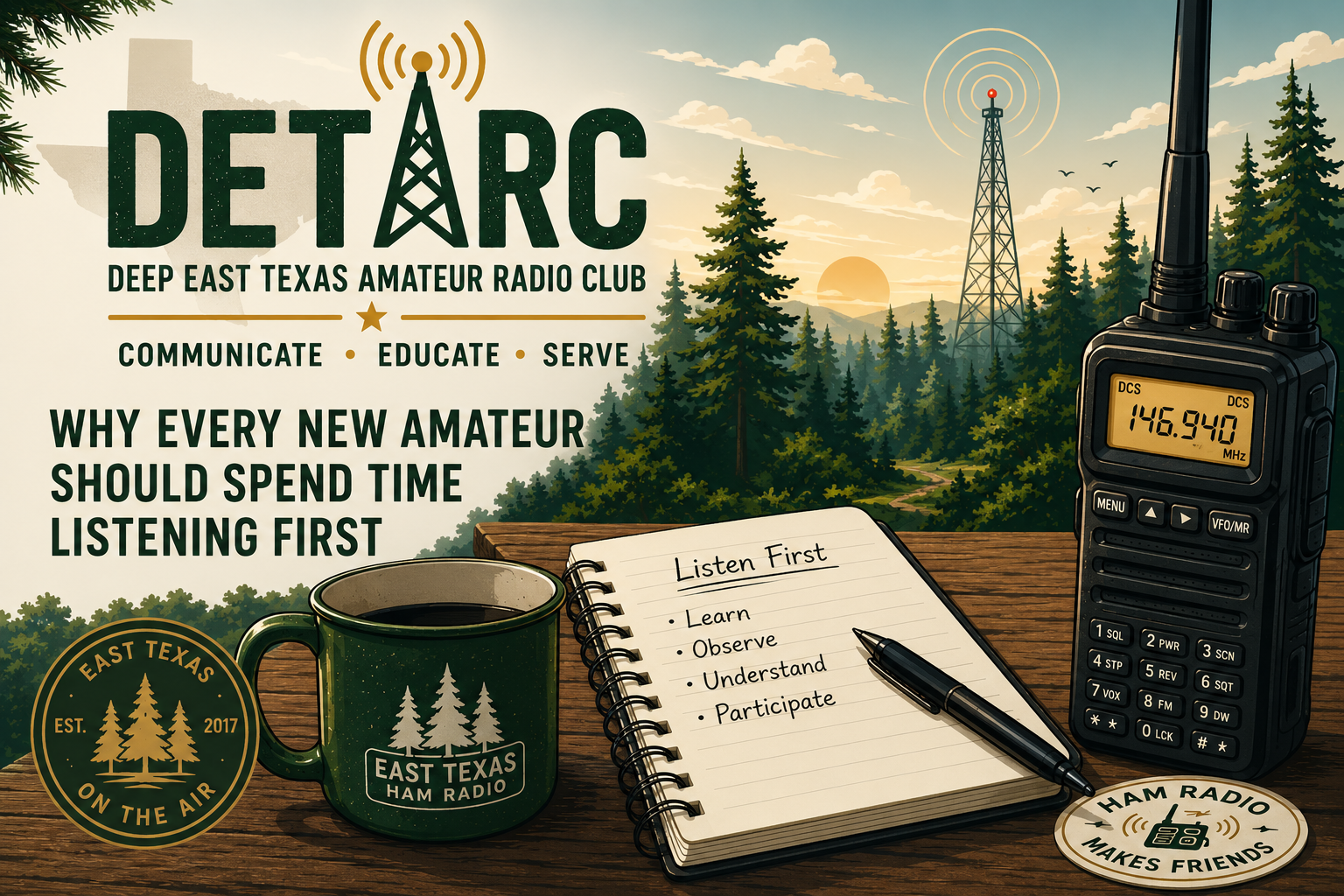
Why Every New Amateur Should Spend Time Listening First
One of the first questions new amateur radio operators ask after receiving their license is, “What should I do now?” The temptation is often to immediately begin transmitting, making contacts, or purchasing additional equipment. While enthusiasm is one of the greatest strengths of the amateur radio community, there is considerable value in spending time listening before keying the microphone.
Listening is one of the oldest traditions in amateur radio. Experienced operators often advise newcomers to “listen first, transmit second.” This advice is not intended to discourage participation. Instead, it helps new operators become familiar with operating practices, local repeater customs, and the rhythm of radio communication.
Learning the Local Repeater
Every repeater develops its own personality. Some repeaters are highly technical, with discussions focused on antennas, electronics, and digital modes. Others serve as social gathering places where members check in daily to discuss local events. Many clubs conduct weekly nets that provide announcements, training, and opportunities for members to participate.
By monitoring a local repeater for several days, a new operator can learn:
- Common operating procedures
- Local call signs
- Net formats
- Courtesy practices
- Emergency communication protocols
This familiarity often makes the first transmission much less intimidating.
Developing Good Operating Habits
Listening also helps operators learn proper identification procedures, phonetic alphabets, signal reports, and effective communication techniques. Amateur radio is unique because operators of all experience levels share the same frequencies. Hearing experienced operators handle pileups, conduct nets, or assist newcomers provides valuable practical instruction.
Good operating habits include:
- Speaking clearly and slowly
- Leaving pauses between transmissions
- Using call signs correctly
- Avoiding interruptions
- Keeping transmissions concise during busy periods
These skills are best learned through observation.
Beyond the Repeater
Modern amateur radio offers far more than local FM communication. Operators may explore:
- High-frequency (HF) contacts around the world
- Digital modes such as FT8
- Satellite communications
- Amateur television
- APRS tracking
- Emergency communications
- Mesh networking
- Portable and field operations
Listening to these activities often sparks interests that new operators never knew existed.
The Value of Patience
Many experienced amateurs can remember their first contact decades later. The anticipation, nervousness, and excitement become lasting memories. Spending time listening beforehand builds confidence and helps ensure that first contact is enjoyable.
The amateur radio community is generally welcoming and eager to help newcomers. Most operators are delighted to answer questions and encourage participation. By taking time to listen and learn, new operators quickly become comfortable and discover where their own interests lie.
Final Thoughts
Amateur radio has always been a hobby of learning. Whether experimenting with antennas, exploring digital modes, assisting during emergencies, or simply making friends across town or around the world, there is always something new to discover.
Before transmitting, spend some time listening. The conversations, procedures, and personalities heard on the air provide an education that no manual can fully replace.
And when you’re ready to key the microphone, you’ll already feel like part of the community.
